
Vea también


 17.11.2026 11:54 AM
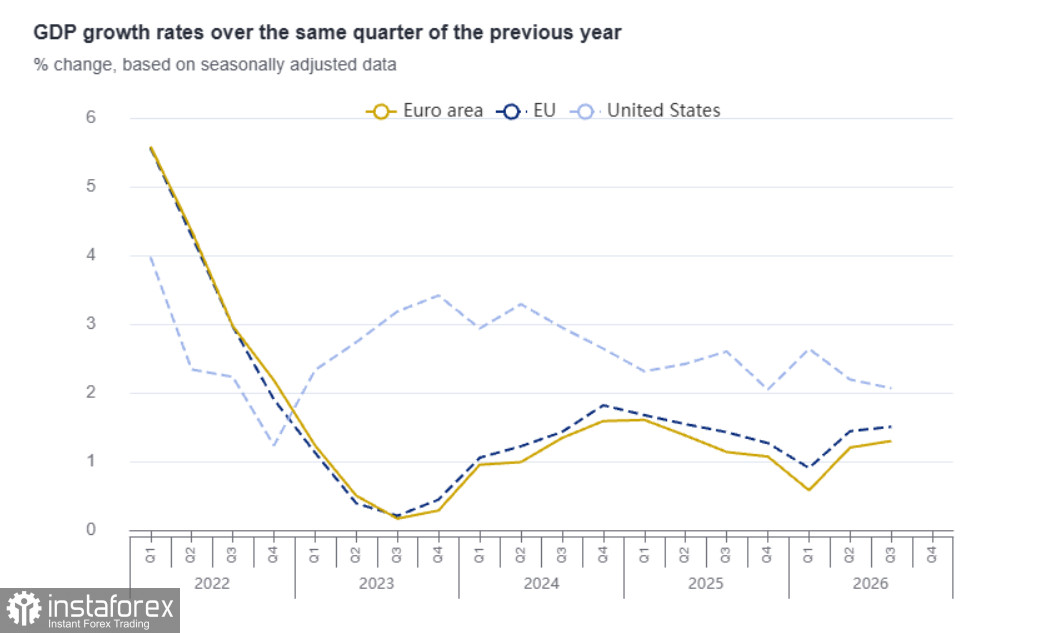
Third-quarter GDP data came as a surprise. Eurostat confirmed quarter-on-quarter growth of 0.4%, but the Irish factor once again distorted the overall picture. Excluding Ireland, growth would have amounted to just 0.2%.
Industrial production, by contrast, points to weakness. In September, eurozone output increased by just 0.2% compared with August, half the expected rate. On a year-on-year basis, production declined by 1.5%, marking the fifth consecutive month of contraction. Weak industrial activity limits the ECB's scope for aggressive monetary tightening, but the resilience of the services sector and labor market prevents the regulator from ignoring inflation risks.
Last week, comments from ECB officials left little doubt that interest rates would continue to rise. ECB Vice-President Boris Vujcic explicitly stated that market expectations of further monetary tightening in 2027 "do not appear unreasonable." Gediminas Simkus echoed this view, noting that a single rate hike in December might not be sufficient.
The Reuters poll forecast is almost unanimous: all 71 economists surveyed expect the deposit rate to rise to 2.75% at the December meeting, while more than a third anticipate another increase in the first quarter of 2027. The reason is clear: inflation reached 4.0% in October, twice the ECB's target, while the energy shock risks generating second-round effects on wages and the services sector.
Markets have already priced in two or three rate hikes by the end of next year. The only remaining source of uncertainty is how cold the winter will be.
The gas market remains the most vulnerable area. By mid-November, European gas storage facilities were approximately 70.5% full, significantly below the five-year seasonal average of 89%. Storage levels at the beginning of the heating season were also the lowest since 2013. Following a brief decline in early November, December TTF futures once again exceeded $1,000 per thousand cubic meters, while the average price in October was 2.6 times higher than a year earlier. By November 16, prices had retreated to €86 per megawatt-hour amid expectations of warmer weather and record US LNG exports. However, there has been no fundamental improvement in the situation.
The CFTC report showed that the net short position in the euro decreased by 2.06 billion to -20.02 billion. The bears retain a substantial advantage, but the estimated price remains above its long-term average, which adds another element of uncertainty to the outlook.
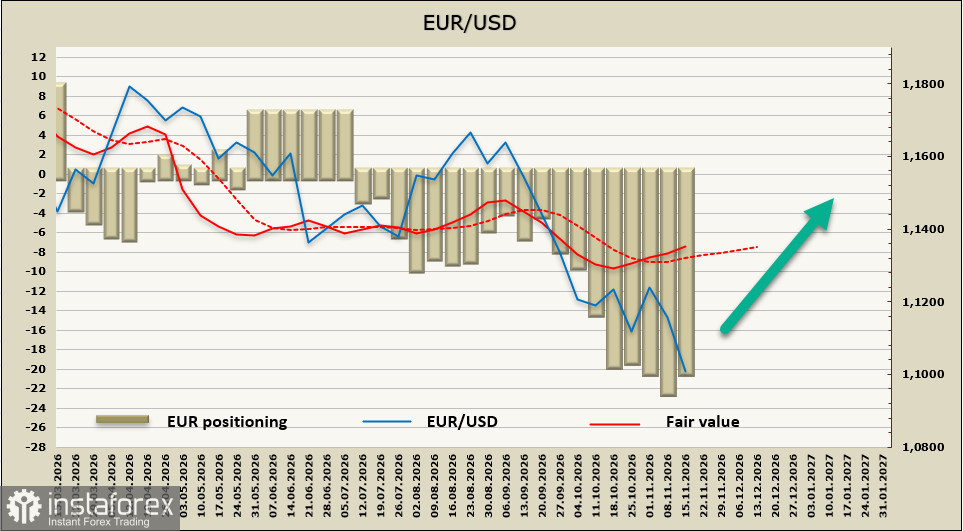
A week earlier, the possibility was raised that geopolitical factors could push the euro down to 1.1000, and this scenario materialized. This is a psychologically important level, but the risk of a break below it remains high, as the euro lacks its own growth drivers amid energy-related uncertainty.
Historically, EUR/USD tends to appreciate toward the end of the year, and a return to the 1.1200–1.1700 level remains possible. However, there are currently no clear catalysts for such a recovery. If the ECB meets bullish expectations at its December meeting, the euro could have an opportunity to recover. Otherwise, consolidation below 1.1000 will become the primary scenario.


